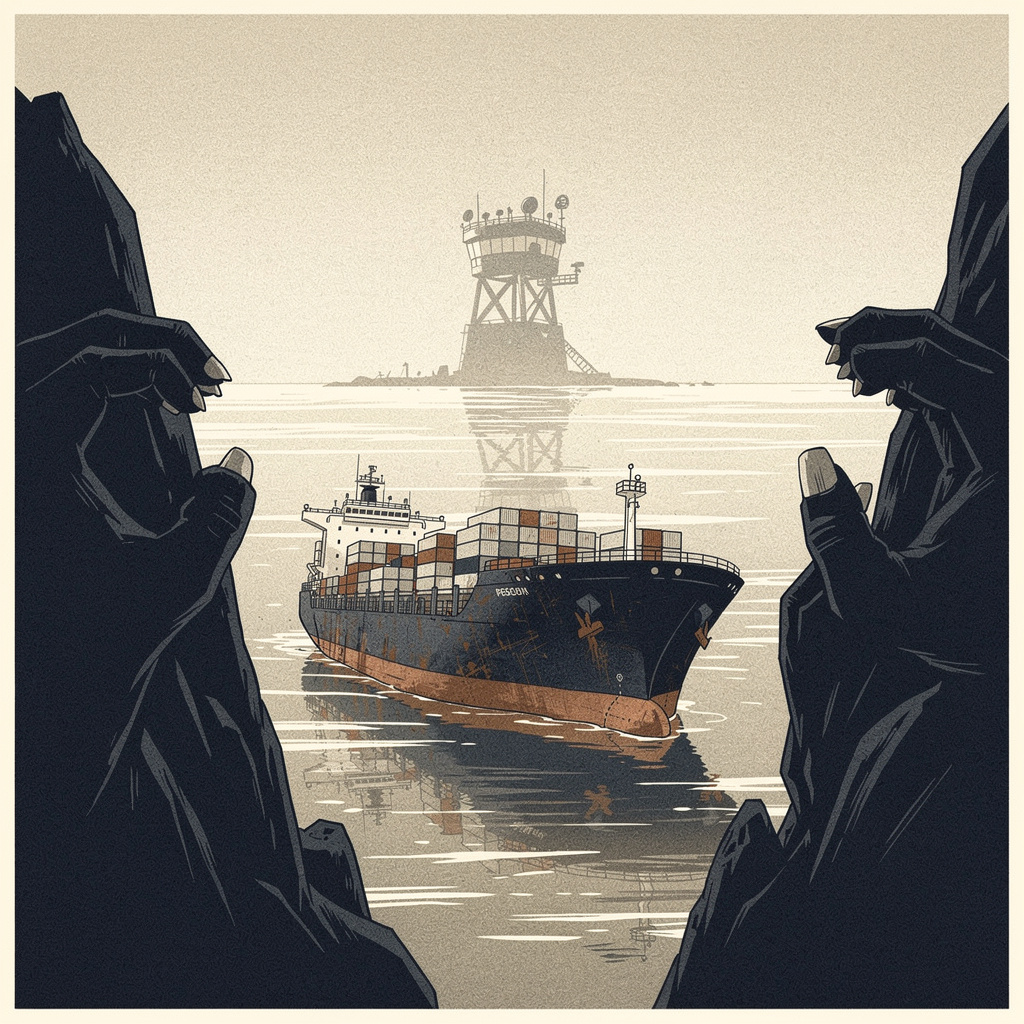

On February 28, 2026, after joint US–Israeli strikes killed Supreme Leader Ali Khamenei, Iran's Revolutionary Guard announced the closure of the Strait of Hormuz 124111317. Within days, tanker traffic through the chokepoint—carrying roughly 25% of global oil and 20% of liquefied natural gas 513—collapsed by 70% 5141521222528. Brent crude climbed to $126 per barrel by March 8 141521, the sharpest energy shock since the 1970s 14152122252729. The question analysts are still parsing: was this purely retaliatory theatre, or did Iran engineer the largest supply disruption in oil-market history 14152122252729 with calculated economic ends?
“Iran's own petroleum exports were already under intense US sanctions; blocking Hormuz did not materially worsen Tehran's revenue position. What it did do was remove 20% of global daily oil supply at a stroke, spiking prices and inflicting acute pain on oil-importing economies.”
The military narrative is straightforward. Multiple outlets report Iran launched missile and drone strikes against US bases, Israeli territory, and Gulf allies 1521252829, then warned vessels against transit 24. The Revolutionary Guard carried out at least 21 confirmed attacks on commercial ships between February 28 and March 12 1922, and laid mines in the strait according to CNN 29. Over 150 vessels anchored outside the waterway to wait out the storm 152122. The traffic data—a near-total halt—aligns with deterrence: make passage prohibitively risky, and the flow stops without needing to sink every tanker.
Yet the economic mechanics tell a more nuanced story. Iran's own petroleum exports were already under intense US sanctions; blocking Hormuz did not materially worsen Tehran's revenue position. What it did do was remove 20% of global daily oil supply 15212228 at a stroke, spiking prices and inflicting acute pain on oil-importing economies—many of them US allies or trading partners. The World Economic Forum notes the crisis rippled beyond crude to at least nine other commodities 10161820212223, including aluminium, fertiliser, and helium 19. African economies dependent on Gulf fuel faced crippling cost surges 20; Kenya's matatu drivers went on strike over pump prices in mid-May 24. The FAO flagged global agrifood-market instability 23. Iran, in effect, weaponised the chokepoint not to protect its own flows—those were already choked—but to impose systemic costs on adversaries and neutrals alike.
The timeline supports this reading. On March 9, President Trump declared Iran's forces "destroyed" and Hormuz "reopened" 51427—a claim contradicted by continued low traffic and Tehran's April announcement of a $1 million toll on transiting vessels 14. The US imposed its own counter-blockade of Iranian ports on April 13 1513, creating what The Guardian termed a "double blockade" 27. By mid-May, Trump had called on NATO and China for help reopening the strait 51427, and Russia—ever alert to opportunity—ramped up its own energy exports to fill the vacuum and cushion sanctions fallout 30. The crisis, in other words, reshuffled global supply chains in ways that weakened US leverage and opened new revenue streams for Moscow.
Iran's motives, then, appear hybrid: punish the attackers, yes, but also demonstrate that Tehran retains an asymmetric veto over Gulf energy flows even after suffering devastating air strikes. The 70% traffic drop 5141521222528 was the mechanism; the $126 oil price 141521 was the signal. For a sanctions-strangled petrostate, controlling the valve—even if you can no longer use the pipeline yourself—remains a potent form of coercion. The real test will be whether Iran can credibly threaten future closures without provoking a permanent US naval cordon. So far, the data suggest the toll booth is still standing.